

- Home
- Inzichten
Insights
Generations, Binders and How We Use the Phone
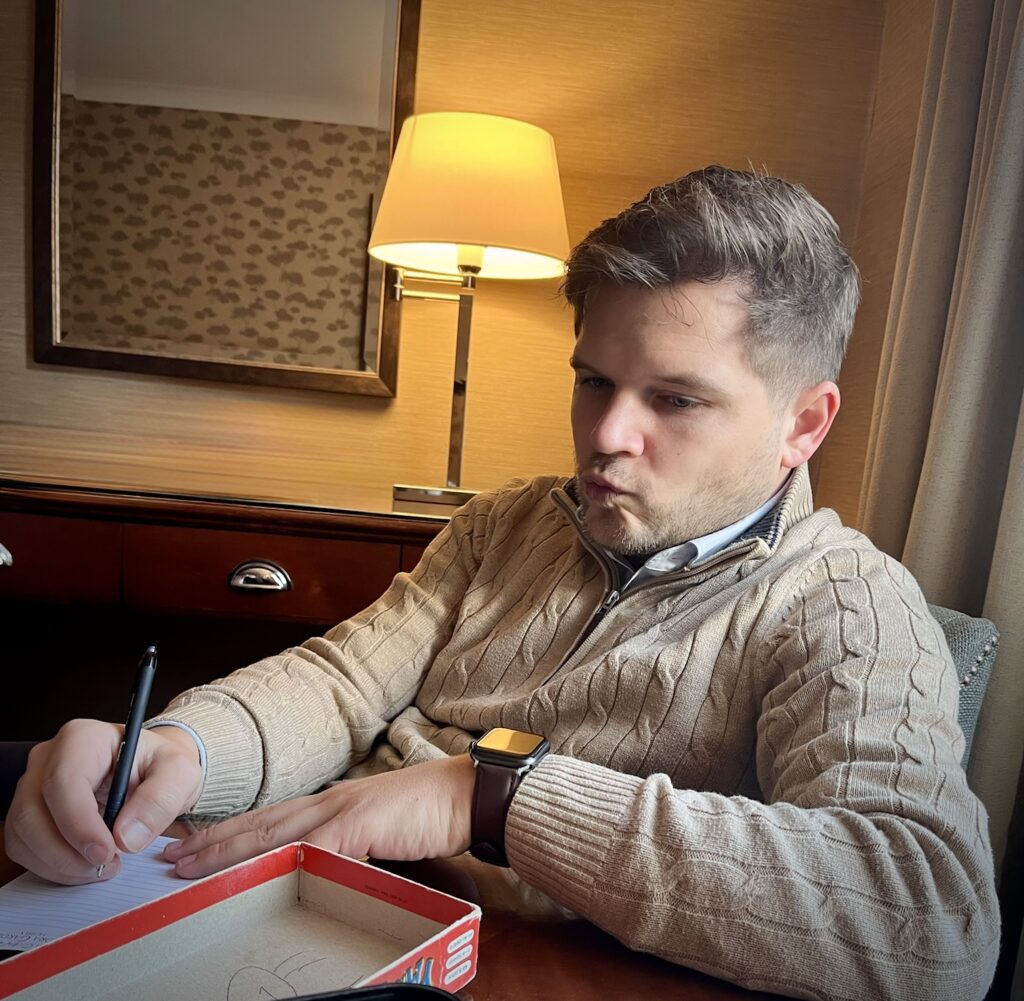
There has been a fair amount of research in recent years on perfectionism among millennials and Gen Z. Studies consistently show that millennials score higher on perfectionist tendencies than any other generation, with social media and constant peer comparison driving that pressure even further in younger cohorts. I read that and thought: yeah, that tracks.
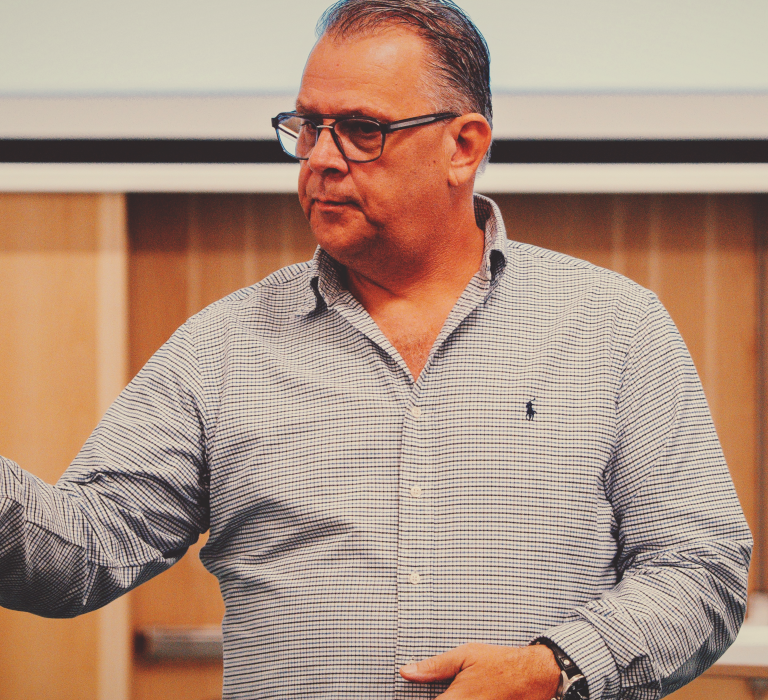
I’m Luc Silvertand, 27 years old. Technically Gen Z, though I’ve always felt more like a millennial. I grew up as the internet was taking off, but I didn’t have a smartphone as a kid. Bernd Zalewski, owner of QESH Services on Aruba, is 62 and funnily enough also sits right on a generational boundary. Depending on the definition you use, he’s either a late Baby Boomer or an early Gen X. He considers himself firmly Gen X. Which just goes to show how much those labels are worth.
Bernd built a successful business in the Netherlands before moving to Aruba and building QESH Services from the ground up. Over the years, he has become a well-known name in quality management, safety and compliance. He came up in an era where you built a business through phone books, print advertising and an administration that lived entirely in physical binders.
That last part I discovered on my first day at his office. Cabinet after cabinet, row after row. And once you see how QESH operates, everything structured, traceable and documented, it makes complete sense. The system works. It always has.
At SBNS we do essentially the same thing, just digitally. Drives, dashboards, automations, processes tied directly to documents. Same goal, different tools. Bernd’s take on that was straightforward: “If it works, it works.” Mine tends to go the other way: if it can be automated, it should be.
What Your Generation Hands You
The difference between us shows up most clearly in how we make decisions. Bernd doesn’t need to run the numbers or deliberate at length. Within minutes he sees what needs to happen, not because he thinks faster, but because he has seen the pattern dozens of times before. His approach is direct: what’s the problem, what’s the fix, who owns it and when does it need to be done?
I, on the other hand, will regularly spend an hour refining a template or tightening a paragraph before I’m willing to call it done. Bernd put it well: “You can build the perfect system, but if you don’t sell it, what’s the point?”
Social media and hustle culture have trained younger generations to measure themselves against an impossibly high standard, professionally as much as personally.
Call or Text
Communication is another one. Bernd’s generation picks up the phone. A quick call, get on the same page, move on. For him, calling isn’t an interruption. It is efficiency.
My generation tends to treat calling as a last resort. Not out of laziness, but out of a genuine aversion to catch someone off guard or take up their time uninvited. We’d rather send a message and let the other person respond when it suits them. Bernd finds that inefficient sometimes. I find his approach blunt sometimes. But honestly, both work fine as long as you understand where the other person is coming from.
Polish or Substance
The generational gap shows up in working style too. I want everything to look sharp: consistent branding, clean layout, precise language. Bernd focuses almost entirely on the substance. Is the message right? Is it credible? Can we back it up? Good, send it.
It’s a recognizable pattern. Younger generations grew up in a world where presentation matters almost as much as content, shaped by platforms where everything looks polished by default. Older generations learned through experience that substance wins in the end. And honestly, they’re not wrong.
What We Share
For all the differences, we recognize each other pretty easily. The same drive for quality, the same work ethic, the same feeling that there’s always something left to improve. Neither of us is ever really done. We just get there differently.
Bernd learns from me how digitalization and automation can make things faster and leaner. I learn from Bernd that focus, relationships and timing often matter more than having the perfect tool. Experience without innovation gets slow. But innovation without experience? That’s just a beautifully built system that nobody uses.
Age doesn’t determine who’s better at what. It shapes how you think. And when you combine the two, the rigor of QESH with the digital efficiency of SBNS, you get something most organizations actually need: real control over quality, without years of groundwork to get there.
Could you use some help getting a clearer picture of quality in your organization? We’d love to help. Send an email to info@QESHAruba.com or info@SBNS-Solutions.com, or book a call directly to work through your challenge together.